Airbnb's checkout-chore ban is broad. It is not absolute. The official policy carves out a small set of narrow exceptions, and understanding where those exceptions start and stop matters for both sides: guests who don't want to be ambushed with extra tasks, and hosts who have genuine safety or environmental reasons for a specific checkout request.
This guide covers only what is verified. As of October 2026, exactly two exception categories have been officially confirmed, and one logical carve-out follows from how law works everywhere. Everything else — including creative readings like "my HOA requires it" or "guests in my area expect it" — falls outside the confirmed list, and we flag it accordingly.
The two officially confirmed exceptions
1. Wildlife safety: bear-proof trash
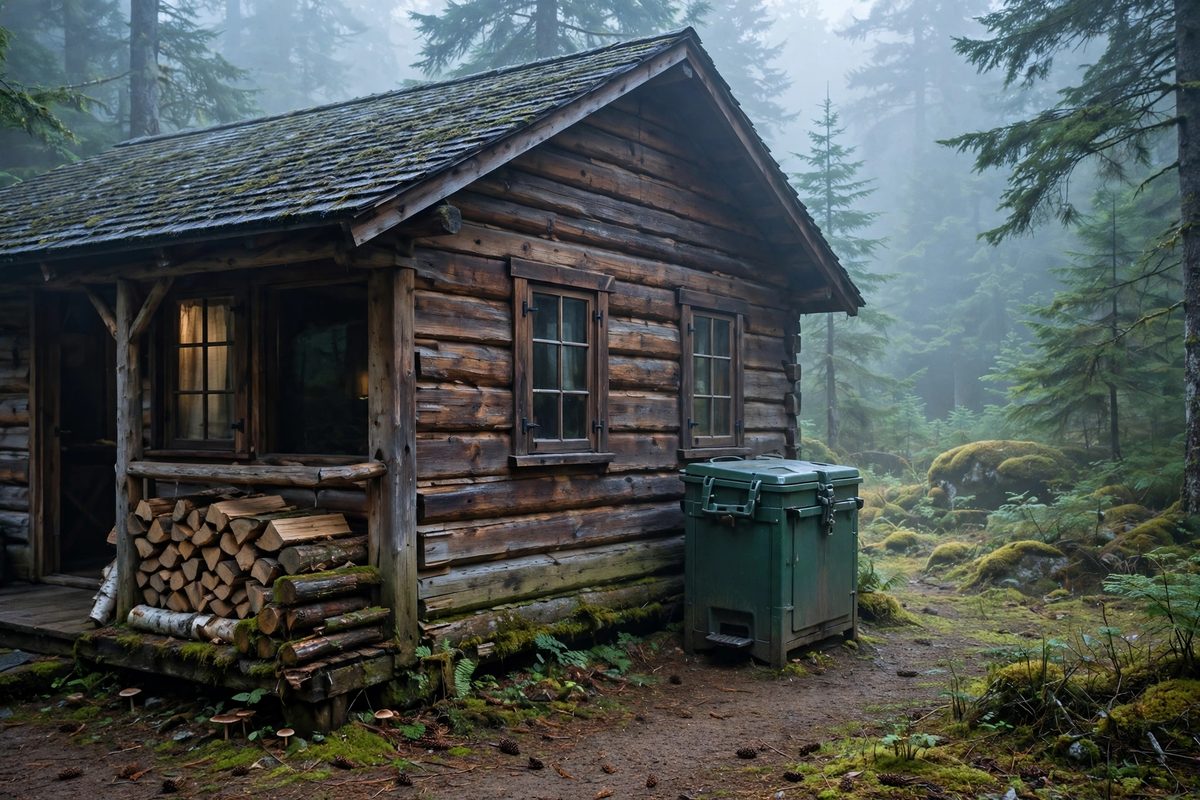
Airbnb has confirmed that hosts in wildlife areas may continue to require guests to handle trash in a bear-safe way (third-party reporting citing official confirmation). This is the clearest example of a safety exception: improperly stored trash in bear country is a genuine hazard, not a housekeeping shortcut.
The reasoning is straightforward. The ban targets chores that save the host or their cleaner time — stripping beds, running laundry, hauling trash offsite. Bear-proof trash handling doesn't exist for the host's convenience. It exists because local wildlife authorities require it and because loose trash creates a real danger to both guests and animals. That is why it survived the ban while general trash duties did not.
What this does not mean: a host in downtown Chicago cannot claim a "wildlife exception" for taking trash to a communal dumpster. The exception is tied to an actual, documented wildlife risk. The classic example is bear country. It is not tied to a host's preference about where trash should go. The ban on requiring guests to take trash offsite still applies everywhere else (official Help Center).
2. Drought and water-conservation restrictions
The second confirmed exception covers drought-related water restrictions (third-party reporting citing official confirmation). In regions under formal drought restrictions, hosts may ask guests to follow the conservation measures that local rules impose — for example, restrictions on washing linens, running dishwashers, or using outdoor water.
Again, the logic is external constraint, not host preference. If a county or water district says laundry loads are restricted, a host relaying that restriction is not asking guests to do housekeeping for convenience. They are passing along a legal obligation that binds the property itself.
The test is simple: is the request traceable to a formal drought order or water district rule? A host who just prefers to save water during a normal summer does not have a confirmed exception. The drought exception is global in scope where drought orders actually exist, but it is narrow in application.
The narrowing rule of thumb. If you can point to a government order, wildlife authority guidance, or comparable external rule, you may have a genuine exception. If the request only exists because the host prefers it that way, it is almost certainly covered by the ban.
The third carve-out: local law takes precedence
Beyond the two confirmed exceptions, one more category exists by basic legal logic rather than by explicit Airbnb statement: local law wins. If a municipal ordinance, HOA covenant with legal force, or building regulation requires a specific checkout action — say, a city ordinance requiring trash to be sorted into specific municipal bins on a specific schedule — that requirement comes from the law, not from the host.
This is our own analysis of how the policy must work in practice, not an officially announced exception (third-party reasoning). Airbnb's policy governs what hosts may require as their own house rules and requests; it cannot override a city ordinance. But the practical guidance is the same as for the confirmed exceptions: the request must be traceable to the external rule, and the host should be able to show it.
This is particularly relevant for US readers, because local rules vary enormously across US jurisdictions. A bear-proof trash rule in Colorado mountain towns looks very different from a recycling-sorting ordinance in a California city — but in both cases, the host's job is the same: disclose the rule properly and keep evidence of the underlying requirement.
US vs. global scope
The checkout-chore ban applies globally — third-party reporting has confirmed the policy is not US-only. That matters for how exceptions are read:
- Global framing: the two confirmed exceptions (wildlife safety, drought) apply wherever those conditions genuinely exist, in any country. A drought order in Cape Town or a bear country listing in the Alps reads the same way as the US equivalents.
- US framing: the practical texture of exceptions is mostly local. Bear-proof trash is overwhelmingly a US-listing issue (Rockies, Sierra Nevada, Smokies). Drought rules hit the US West hardest. US hosts also face the densest layering of municipal codes and HOA rules, which makes the "local law" carve-out most relevant here.
For both scopes, the same caution applies: these exceptions are narrow by design. Airbnb's official posture, per its spokesperson's "no surprises" statement, is that the booking experience should be predictable. A listing that invents exceptions for ordinary chores would be exactly the kind of surprise the policy was written to kill.
How hosts should document an exception
An exception that isn't disclosed is indistinguishable from a violation. If you are a host relying on one of these narrow carve-outs, the evidence trail matters — especially given the disclosure rule (see below). Recommended practice:
- Name the external rule. In the listing's house rules and requests area, say what the rule is and where it comes from: "Per [county/authority] wildlife regulations, trash must be stored in bear-proof bins" — not "please take care with the trash."
- Keep the underlying document. Save the ordinance text, wildlife authority guidance, or drought order. If a guest disputes the request, the citation ends the argument.
- Disclose before booking, in the listing. The disclosure rule (official, via inc.com quoting an Airbnb spokesperson) requires all house rules and requests to be visible in the designated listing area at the time of booking. An exception communicated only in a message, a house manual, or a sign on the wall does not comply — see house-rules-vs-host-requests.html for why post-booking additions are invalid.
- Map it to the official editor. Use the official path: desktop Listings → Listing editor → House rules and requests → Add/Save (official Help Center article 472, verified live). Requests are filed under During the stay or Before checkout — place exception requests where guests will actually find them before paying.
- Don't stretch it. Bear-proof trash does not justify asking guests to also strip beds. Drought rules do not justify a fine for extra laundry. Keep the exception surgically narrow, or you risk the whole request set being treated as non-compliant.
Guests can spot stretched exceptions. Under the enforcement framework, Airbnb "could include" actions such as warnings, a notice on the listing, search demotion, or further enforcement (official language). A host who hides ordinary chores behind a fake wildlife claim risks exactly this ladder. See non-compliant-listings-after-nov-20.html for the full enforcement gradient.
What is NOT confirmed (and what we don't write)
To be explicit about the boundary, since inventing exceptions is the fastest way this guidance goes wrong:
- HOA preferences, condo building customs, or "the whole street does it" — not officially confirmed as exceptions. If an HOA rule has genuine legal force in the jurisdiction, it may fall under the local-law carve-out above; a preference stated by a property manager does not.
- "Guests expect it here" or cultural norms — not an exception. The policy is global precisely so expectations are consistent.
- Cleaning fees as compensation for exceptions — separate topic; the ban is on required chores, while cleaning fees remain a pricing question. Fines and penalties imposed by hosts themselves are banned separately (official Help Center), with damage claims covered by AirCover.
- Any enforcement cases yet — the policy had not taken effect as of this writing, so there are no verified enforcement cases. Any site claiming to have one is not a source we can verify. Status: no verified data as of October 2026.
The exception list is short on purpose. Airbnb confirmed two; local law follows by necessity. Everything else you hear — treat as unverified until the official Help Center says otherwise.
FAQ
Does the bear-proof trash exception apply to my listing?
Only if you are in a genuine wildlife area where bear-safe (or comparable wildlife-safe) trash handling is required by local authority guidance or regulation. It does not apply to ordinary trash duties like taking bags to a dumpster or the curb. The ban on requiring guests to take trash offsite still applies everywhere else (official Help Center).
Can I ask guests to conserve water even without a drought order?
You can request it as a polite ask, but without a formal drought order or water district restriction, it is not a confirmed exception — and any request that functions as a required chore still falls under the ban. The confirmed drought exception requires a real external restriction, not a host preference.
Does the policy apply outside the US?
Yes. Third-party reporting has confirmed the policy is global, not US-only. The two confirmed exceptions apply wherever wildlife risk or drought orders genuinely exist, in any country.
What if my HOA requires a specific checkout action?
This is not on the officially confirmed exception list. If the HOA rule carries genuine legal force in your jurisdiction, our analysis is that local law would take precedence — but that is third-party reasoning, not an official Airbnb carve-out. Disclose it in the listing's house rules area before booking, cite the underlying rule, and keep documentation. Do not use it as cover for additional ordinary chores.
Do I need to prove my exception to Airbnb in advance?
There is no verified pre-approval process for exceptions as of October 2026. The practical standard is disclosure plus documentation: state the exception in the listing's designated house rules and requests area before booking, name the external rule, and keep the underlying order or guidance on file in case of a dispute.
Can a host fine me for ignoring a drought exception request?
No. Host-imposed fines and penalties are banned outright (official Help Center), separate from the chore rules. If a host charges you a fine, that is itself a policy violation — see [non-compliant-listings-after-nov-20.html](non-compliant-listings-after-nov-20.html) for how to report it.
Related reading: When Does the Policy Apply? Bookings on or After November 20 · Host Compliance Checklist · What Hosts Can Still Ask